Veneer shapes that suit your face
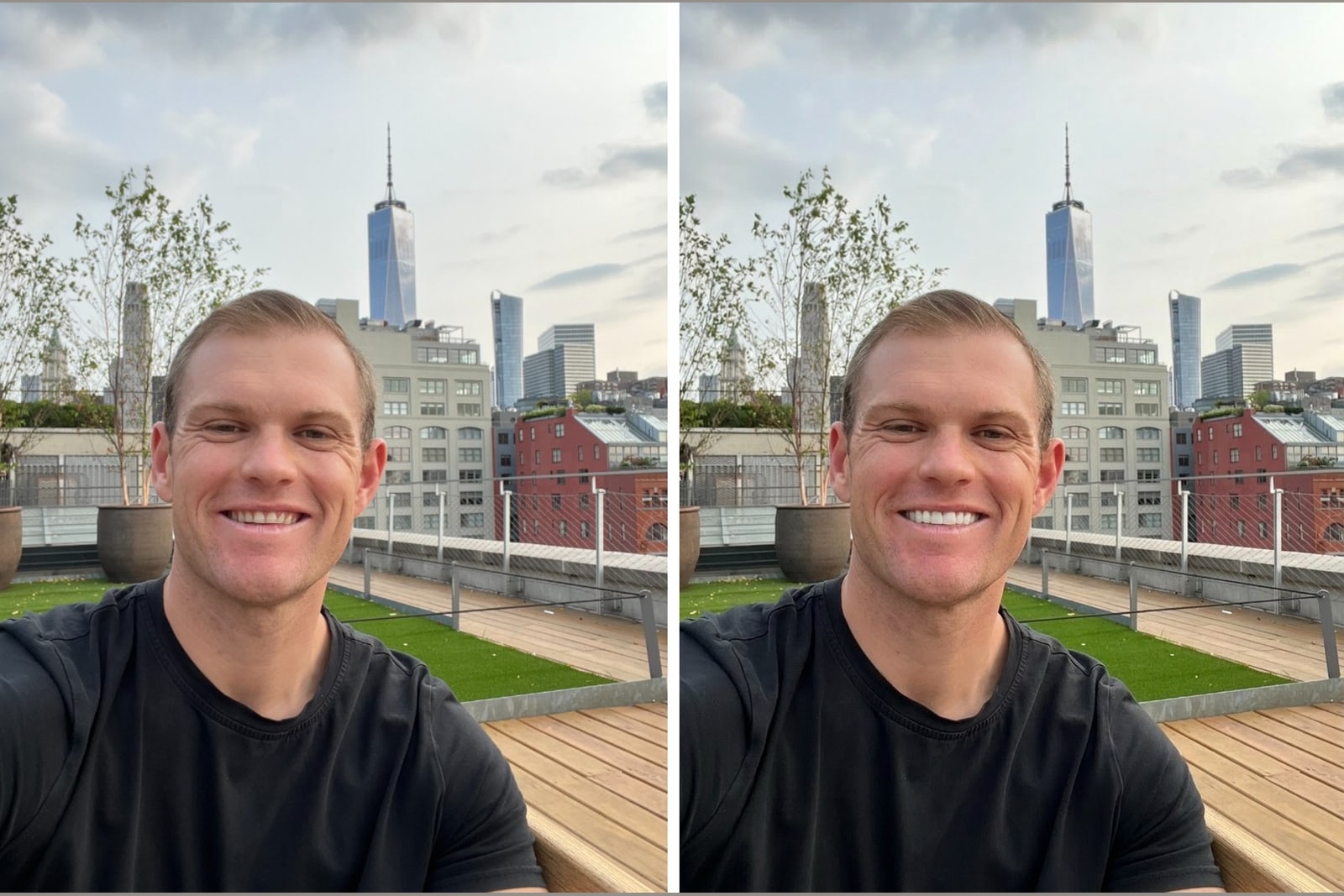
Veneer shape is the outline of each tooth, from rounded and soft to squared and bold. It reads differently against different faces. As a starting point, softer rounded shapes suit angular faces, and squarer fuller shapes suit rounder faces. Here is how tooth shape and proportion work against your features, and how to match a shape that fits.
Key takeaways
- Shape is the outline and length of each tooth. It is separate from shade, which is the color.
- Rounded soft shapes read gentle. Squared broad shapes read bold and structured.
- A common rule is to contrast the tooth shape with the face shape for balance.
- Central teeth, laterals, and canines each shape how natural or dramatic a smile looks.
- Veneerly renders ten designs across five styles on your own photo in about 60 seconds.
Veneerly is an aesthetic preview tool. It is not dental or medical advice and it is not a substitute for a consultation with a licensed dentist.
What does veneer shape actually mean?
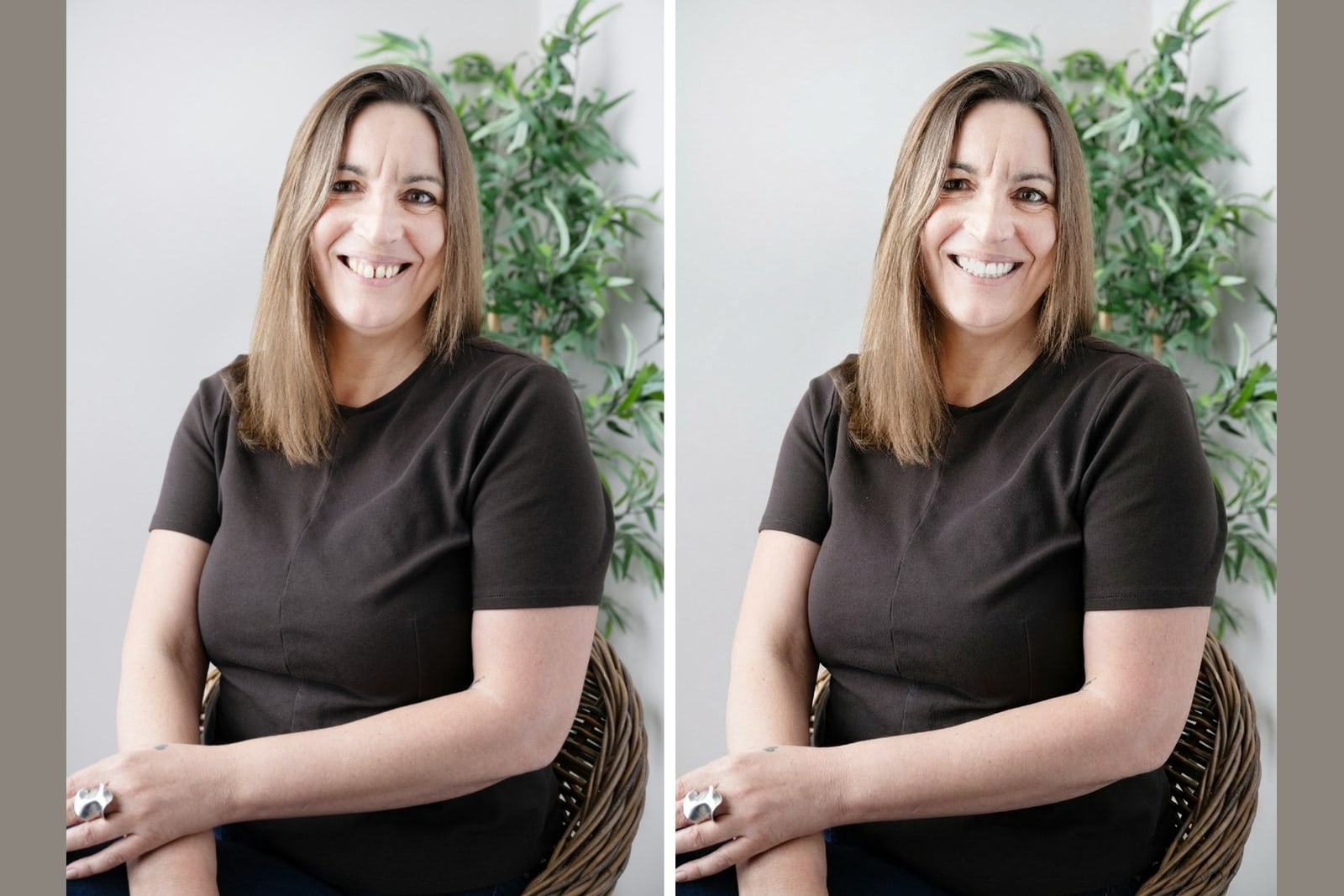
Veneer shape is the outline of each tooth: how rounded or squared the edges are, how long the teeth sit, and how the central teeth, laterals, and canines relate in size. Shape is separate from veneer styles, which describe the overall character, and separate from shade, which is the color from Natural Ivory (A1) to Ultra White (BL1). You pick a shape first, then a color.
Three tooth parts do most of the work. The two central teeth set the dominance of the smile. The laterals beside them set how full or delicate it reads. The canines set how soft or pointed the corners of the smile look.
The main veneer shapes and how they read
There are three families of tooth shape, and each carries a different feel before you even choose a color.
| Shape | The outline | How it reads | Best paired with |
|---|---|---|---|
| Rounded (oval) | Soft edges, gentle corners, shorter squarer proportion | Youthful and gentle | Angular or square faces |
| Squared | Straight edges, flatter tips, dominant centrals | Bold and structured | Round or soft faces |
| Squared oval | Straight body with softened corners | Balanced and versatile | Most faces |
Rounded shapes
Rounded veneers have soft edges and gentle corners. They read youthful and approachable and tend to soften the whole smile. They pair well with faces that already carry strong angles, because the softness balances the structure.
Squared shapes
Squared veneers have straight edges and flatter tips, with dominant central teeth. They read bold and structured and give a strong, confident smile line. They suit rounder or softer faces, where the straight edges add definition.
Squared oval shapes
Squared oval veneers keep a straight body with softened corners. This is the most versatile shape and works across the widest range of faces, which is why it anchors so many balanced, believable results.
How do I match veneer shape to my face shape?
The common guideline is to contrast the tooth shape with the face shape so the two balance rather than echo each other. A round face gains definition from squarer teeth. An angular face softens with rounded teeth. Below is how that plays out across the main face shapes.
| Face shape | Feature to balance | Shape that tends to fit |
|---|---|---|
| Round | Soft curves, full cheeks | Squared or squared oval for definition |
| Square or angular | Strong jaw, straight lines | Rounded or oval to soften |
| Oval | Balanced proportion | Most shapes, including squared oval |
| Long or narrow | Length in the face | Fuller squarer teeth to add width |
| Heart | Wider forehead, narrower chin | Rounded lower edges to soften the base |
These are starting points, not rules. Your age, the length of your current teeth, and your smile line all matter. This is exactly why seeing shapes on your own photo beats guessing, and you can read more in What will my veneers look like on me?.
How does proportion change the look?
Proportion is how the tooth shapes relate in size, and it changes a smile as much as the outline does. When the two central teeth dominate and the laterals sit slightly smaller, the smile reads natural. When every tooth is equal width and length, the smile reads uniform and bold. Length matters too: longer teeth read more dramatic, shorter squarer teeth read softer and younger. A good result keeps the proportions in step with your lip line and the width of your smile.
Does shape or shade matter more?
Shape sets whether a smile fits your face, and shade sets how much it stands out. A rounded shape in Natural Ivory (A1) reads gentle and real. A squared shape in Ultra White (BL1) reads bold and camera ready. The two work together, but shape is what makes the smile look like it belongs on your face, while shade turns the brightness up or down. Choosing the wrong shape is harder to disguise than choosing the wrong color.
See shapes on your own smile in about 60 seconds
Reading about shapes only takes you so far, because the same shape looks different on every face. Veneerly renders ten designs across five styles onto a photo of your real smile in about 60 seconds, so you can compare rounded, squared, and squared oval looks on your own face. It uses your own front facing photo, only the teeth change, and it is a one time payment from 39 dollars. You can also set six shades from Natural Ivory (A1) to Ultra White (BL1) once you land on a shape you like.
Frequently asked questions
What veneer shape looks best on a round face?
Squared or squared oval shapes tend to suit a round face because the straight edges add definition and structure. The idea is to contrast the tooth shape with the softness of the face so the two balance. Seeing it on your own photo confirms the fit.
What is the most natural veneer shape?
A squared oval shape with dominant central teeth and slightly smaller laterals reads as the most natural. It keeps the proportion your eye expects from healthy teeth. Very uniform, equal sized teeth read more like a bold veneer look.
Is veneer shape the same as veneer style?
No. Shape is the outline and proportion of each tooth. Style is the overall character those shapes create together, from soft and natural to bright and bold. You pick a shape and a style, then set the shade for color.
How do central teeth, laterals, and canines change the smile?
The central teeth set the dominance of the smile, the laterals beside them set how full or delicate it reads, and the canines set how soft or pointed the corners look. Adjusting the balance between them shifts a smile from gentle to bold.
Can I try different veneer shapes on my own photo?
Yes. Veneerly renders ten designs across five styles onto your own front facing photo in about 60 seconds. Only the teeth change, so you can compare rounded, squared, and squared oval shapes on your real smile before you commit.
See which shape fits your face
Upload one photo and compare ten designs across five styles on your real smile in about 60 seconds.},c}
Preview my smile