Veneers for gaps between teeth
Veneers close gaps between teeth by widening the two teeth on each side of the space until they meet. A diastema, the gap between the front teeth, is one of the most common reasons people choose veneers. The key is keeping proportions natural so the closed teeth do not look too wide. For one small gap, bonding is often the simpler fix.

Key takeaways
- Veneers close a gap by widening the neighboring teeth to fill the space evenly.
- The main risk is teeth that look too wide, so proportions are shaped to stay natural.
- One small gap is often better closed with bonding, which is cheaper and reversible.
- Veneerly renders ten gap free designs on your own smile in about 60 seconds.
- Larger or multiple gaps are where a full set of veneers earns its place.
Veneerly is an aesthetic preview tool. It is not dental or medical advice and it is not a substitute for a consultation with a licensed dentist.
How do veneers close a gap between teeth?
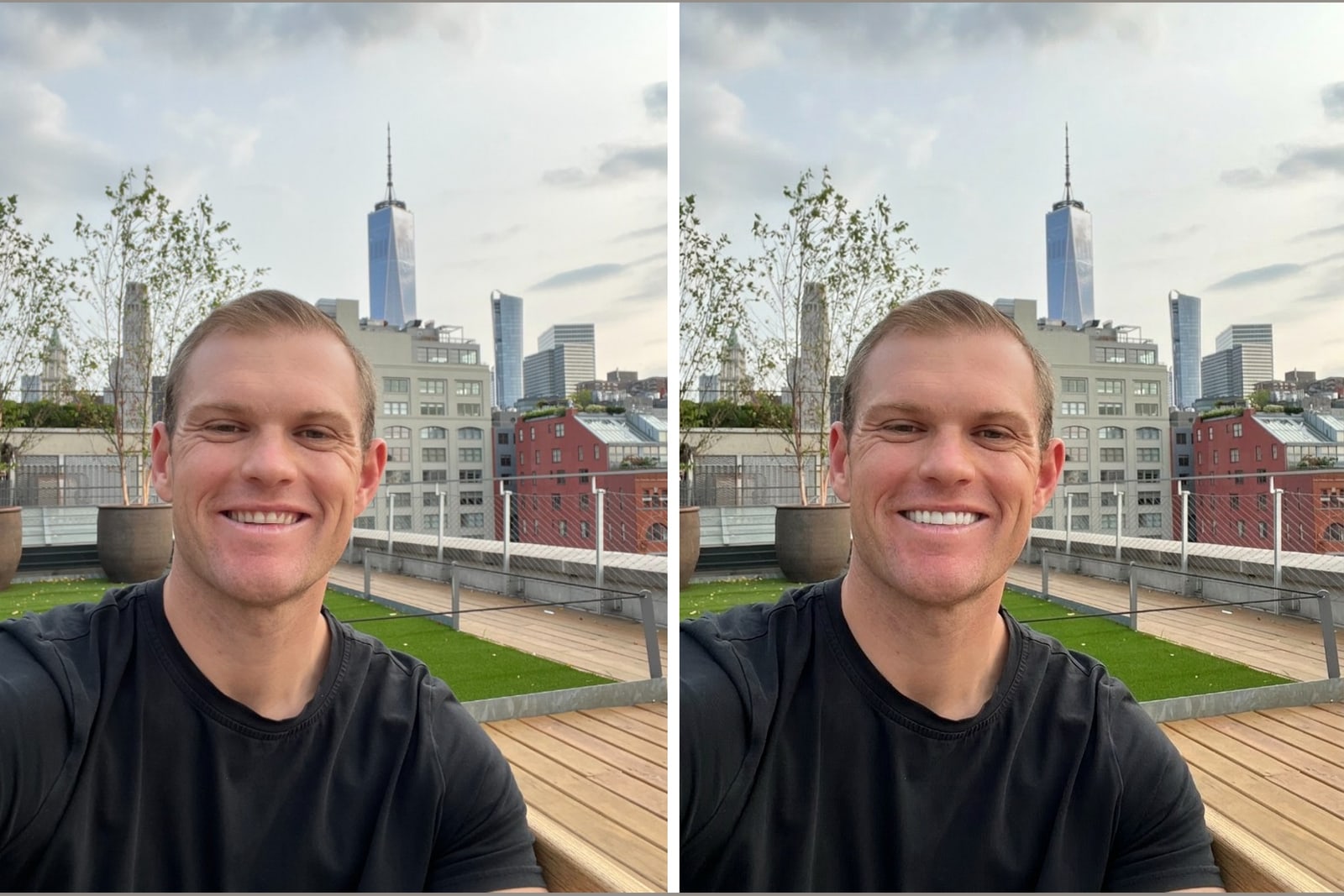
Veneers close a gap by adding width to the teeth on each side of the space until they meet in the middle. A thin shell is placed over the front of each tooth, and the edges are extended slightly toward the gap. For a diastema between the two front teeth, that means both central teeth grow a fraction wider so the space disappears without a visible line.
Because the shells sit on the front surface, the color and shape change together. That is why gap closure is often paired with a shade change, from Natural Ivory (A1) to Ultra White (BL1), so the finished smile reads as one even set rather than two patched teeth.
Will closing a gap make my teeth look too wide?
Teeth can look too wide if the gap is simply filled without adjusting the surrounding teeth. A single central tooth stretched to cover a large space ends up out of proportion with its neighbor. The fix is to spread the closure across more than one tooth and to shape the width and height together, so each tooth keeps a believable ratio.
A common guide is that a front tooth reads natural when its width is roughly four fifths of its height. When a gap is wide, closing it across four or six teeth instead of two keeps every tooth inside that range. This is the single most important part of gap work, and it is easy to judge once you see it on your own smile rather than imagining it.
Veneers or bonding for a single small gap?
For one small gap, bonding is often the better first choice. Bonding adds tooth colored resin directly to the teeth in a single visit, with no lab step, and it costs less than veneers. It is also reversible, since little or no natural tooth is removed. Veneers make more sense when the gap is larger, when there are several gaps, or when you also want to change color, shape, and alignment at the same time.
| Situation | Better fit | Why |
|---|---|---|
| One small gap, teeth otherwise fine | Bonding | Lower cost, one visit, reversible |
| Wide diastema | Veneers | Width spread across teeth keeps proportions natural |
| Gaps plus color or shape change | Veneers | One treatment covers everything at once |
| Multiple gaps across the smile | Veneers | Even spacing is designed across the full arc |
For a full breakdown of the two, see veneers vs bonding: cost, look, and longevity. If your gaps come with rotated or overlapping teeth, veneers for crooked teeth: when they work covers how alignment and spacing are handled together.
What if the gap is from crowding or missing teeth?
Gaps have different causes, and the cause changes the plan. A natural diastema between healthy front teeth is straightforward to close with veneers or bonding. Gaps left by a missing tooth are different, since a veneer cannot fill the space of an absent tooth, and that needs a dentist to assess an implant or bridge first. Gaps from teeth that have drifted may need alignment before the surfaces are treated.
This is a preview tool, not a diagnosis. Veneerly shows you the aesthetic result of a gap free smile so you can decide what look you want, then you take that clarity to a dentist who confirms what is possible for your teeth.
How do I preview my gap closed before I commit?
You can see your gap closed on your own face before spending anything. Veneerly takes one front facing photo and renders ten designs across five styles in about 60 seconds, from Soft Natural to Ultra Bright. Only the teeth change, so your lips, skin, and the rest of the photo stay exactly as they are. Six shades let you test how white you want to go alongside the closed spacing.
It is a one time payment from 39 dollars, with no subscription. You get to compare a natural close against a bolder, brighter set on the same smile, which makes the proportion question concrete instead of abstract.
Frequently asked questions
Can veneers close a gap between front teeth?
Yes. Veneers close a diastema by widening the two front teeth until they meet in the middle. The width is shaped so both teeth stay in natural proportion, and the result covers the whole gap with no visible line.
Is bonding better than veneers for a small gap?
For one small gap, bonding is often the better first choice. It costs less, takes a single visit, and removes little or no natural tooth. Veneers make more sense for wider gaps, several gaps, or when you also want a color and shape change.
Will my teeth look too big if I close a gap with veneers?
Not if the closure is spread across enough teeth. A single tooth stretched over a wide gap looks too wide, so the width is shared across two, four, or six teeth to keep each one in natural proportion. Seeing it on your own photo makes this easy to judge.
Can veneers fix a gap from a missing tooth?
No. A veneer sits on the front of an existing tooth and cannot fill the space of a missing one. Gaps from missing teeth need a dentist to assess an implant or bridge first. Veneerly can preview the look, but the cause needs a professional plan.
How much does it cost to close a gap with veneers?
The dental cost depends on how many teeth are treated and your local prices, so a dentist quotes that. To preview the result first, Veneerly is a one time payment from 39 dollars and shows your gap closed on your own smile in about 60 seconds.
See your gap closed on your own smile
Upload one photo and see ten gap free designs across five styles in about 60 seconds.},ccta_placeholder
Preview my smile